In brief
As President Yoon Suk-yeol's martial law raises alarms, citizens reflect on historical traumas and the fight for democracy.
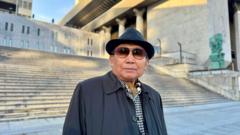
Koh Jae-hak, an 87-year-old, recalls a chilling April day in 1960, watching soldiers firing on protestors demanding the resignation of dictator Syngman Rhee. This moment marked the beginning of yet another martial law in South Korea—a period defined by oppression and unrest. Fast forward to today, the nation, now a symbol of democracy in Asia, is facing a similar alarm. President Yoon took the shocking step of declaring martial law this week, the first since the democratic era began over 35 years ago. This declaration, intended to combat "pro-North anti-state forces," incited panic and protests across the country. As lawmakers scrambled to reverse the decision and citizens gathered to defy the military, it became clear that this was more than just a political move; it was a triggering moment for many who remember the past's harsh realities. In the 1960s through the 1980s, South Korea endured multiple martial law stages, justified by leaders claiming a need to stabilize the nation amid threats like communism. Yet, the scars from violent suppressions, such as the infamous Gwangju Massacre in 1980, linger heavy in the cultural memory. Activists and ordinary citizens alike expressed fear that history might be repeating itself, with many fearing that freedoms won through persistent struggle could be lost once more.Young adults who were educated about past struggles responded with alarm to Yoon’s announcement. A 15-year-old, Kwon Hoo, shared the confusion many felt, initially feeling excited at the prospect of a school closure before fear of societal collapse set in. Meanwhile, older generations, while holding differing views about the past necessity of martial law, unanimously condemned the current declaration as unjustified.Artists and filmmakers have increasingly brought the painful history to modern audiences through popular media, making the past accessible for younger generations who didn’t live through it. This cultural reflection reveals a society wary of a return to oppression; people do not want to experience the constraints of martial law again.In these trying moments, South Korea remains fervently committed to upholding the democratic principles they fought so hard to attain, understanding that freedom is not merely a privilege but a necessity.