Who's Really in Charge in Iran Right Now?
As Iran faces escalating tensions during conflict with the US and Israel, uncertainty clouds the leadership structure. This article explores the dynamics of power and decision-making after the death of the previous supreme leader.
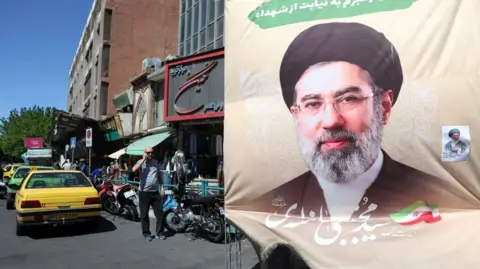
Following the death of Ali Khamenei on February 28, 2026, his son Mojtaba Khamenei assumed the title of supreme leader in Iran. Theoretically, this position grants comprehensive authority over essential matters of the state, including strategies concerning war and peace. Yet, practical authority remains unclear amidst reports of Mojtaba's injuries and a noticeable absence from public eye since he took over.
Compounding this uncertainty is the assertion from various parties—including former US President Donald Trump—that Iran's leadership appears "fractured." Despite attempts by the Iranian government to promote unity amidst its leadership during a crisis, signals of significant disarray persist.
Absence of Leadership
The new supreme leader has not appeared publicly or provided direct evidence of governance beyond a few written remarks. Reports indicate that he was injured during initial strikes at the onset of the conflict. As a result, perceptions of political authority in Iran have shifted, leading to speculation on whether Mojtaba is capable of effectively managing the country’s political structure.
This political vacuum has resulted in operational autonomy among military factions, particularly the Islamic Revolutionary Guard Corps (IRGC), whose commanders are increasingly making critical decisions that shape Iran's military posture with little clear oversight.
The Emergence of Ghalibaf
In light of this vacuum, Parliament Speaker Mohammad-Bagher Ghalibaf has become a prominent figure, positioning himself at the center of negotiations and public messaging. However, his role is precarious, lacking unmistakable legitimacy from the supreme leadership.
Despite ongoing diplomatic engagements, including talks in Islamabad, the effectiveness and directive clarity of Iran's leadership remain questionable. It illustrates a significant oscillation in where power lies, from the presidency to the military, creating a complex spatial setting for decision-making.
Conclusion
This uncertainty in leadership dynamics could hinder Iran’s ability to effectively respond to external pressures while maintaining its internal coherence. The questions of authority, legitimacy, and strategic direction linger as the country navigates its fraught political landscape amidst war.