
In brief
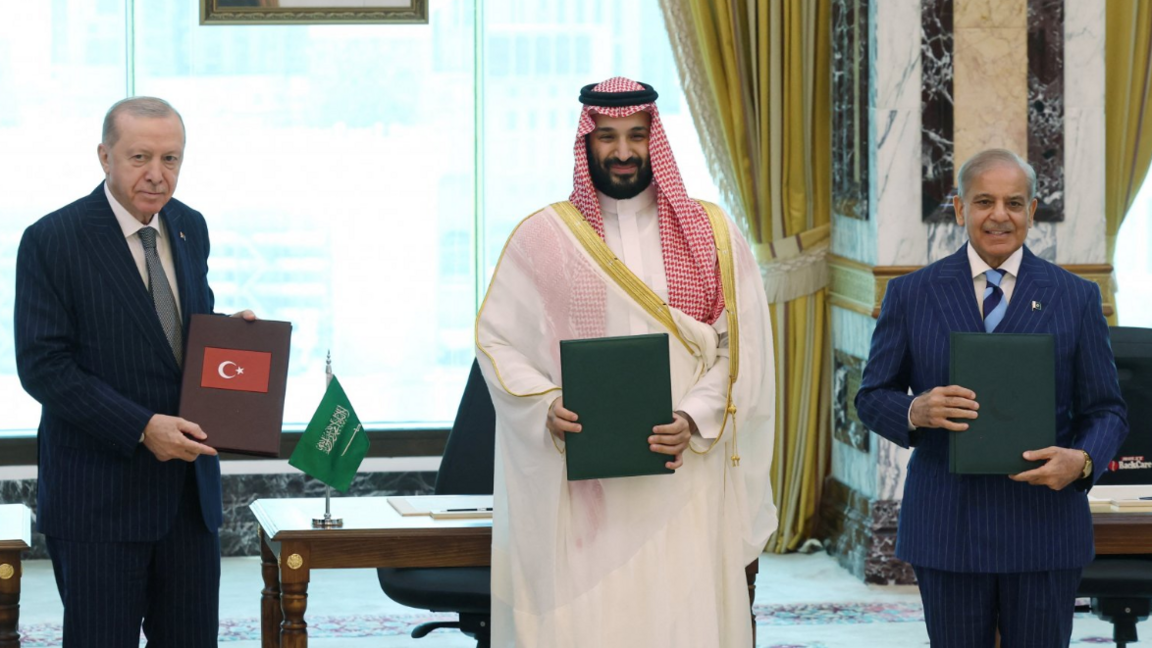
In a historic gathering in Mecca, Saudi Crown Prince Mohammed bin Salman, Turkish President Tayyip Erdogan and Pakistani Prime Minister Shehbaz Sharif signed a joint defence agreement. The pact declares that an attack on one of the three will be treated as an assault on all, boosting collective deterrence amid tensions with Iran and the Houthi rebels. While details of obligations remain vague, the alliance signals a strategic shift in Middle‑East security, offering each country new military and diplomatic leverage.
On 7 August, the leaders of Saudi Arabia, Turkey and Pakistan met in the holy city of Mecca and signed a joint defence agreement. The deal says that an attack on one of the three countries will be treated as an attack on all of them.
Why it matters
- It strengthens the regional security architecture after the Iran‑Israel conflict that rattled oil routes like the Strait of Hormuz.
- It gives Saudi Arabia extra backing to counter Houthi attacks in Yemen.
- It supplies Pakistan with the economic muscle of Saudi Arabia and Turkey’s military industry.
- It offers Turkey new opportunities for joint production and tech sharing.
The agreement is “purely defensive,” the Turkish side said, but it leaves the specific duties of each country open. Because of this, future actions—such as whether Turkey would join a strike in Yemen or if Saudi Arabia would respond to a new conflict in Pakistan—are still uncertain.
What is clear is that by standing behind one another, the three countries can make any aggression far costlier. The only downside? Whether that deterrent can curb unpredictable escalations remains to be seen.
Learn More
Want to explore how this pact ties into the bigger Middle‑East chessboard? Check out related stories on Pakistani, Saudi and Turkish news. 👀


