In brief
South Korea faces a troubling reminder of its dictatorial past as President Yoon Suk Yeol's recent martial law declaration reignites fears of authoritarianism, prompting protests and reflections on historical traumas.
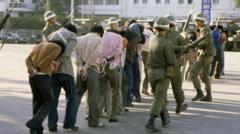
With democracy celebrated in South Korea, the chilling declaration of martial law by President Yoon Suk Yeol has ignited anxiety and outrage among citizens. The recent announcement, the first in 45 years, raised echoes of South Korea's traumatic past, during which 16 martial law instances marked a struggle for civil rights. Koh Jae-hak, an 87-year-old witness to brutal clashes in the 1960s, recalls seeing soldiers mercilessly firing on protesters. During Yoon's announcement, he claimed martial law was essential to combat "pro-North anti-state" forces, yet many questioned the validity of this threat. Unlike previous years, the public surged against troops threatening to enforce military rule, showing a fiercer commitment to democracy.Survivors of prior martial laws, like Kelly Kim, voice profound fear of a repeat of history, fearing restrictions on freedoms. A younger generation, having never lived through martial law, expressed a mix of confusion and dread at the return of such measures. Older citizens offer a polarized view: some feel martial law was previously necessary for stability, but many adamantly oppose any regression into authoritarianism. As protests surged against Yoon's declaration, the spirit of resistance and a commitment to democratic values shone brightly, reminding South Koreans of their hard-fought freedoms.