In brief
In a historic move, leaders from the Commonwealth are advocating for conversations around reparations for the transatlantic slave trade. While the UK maintains a firm stance against financial reparations, they acknowledge that meaningful discussions are necessary for healing and justice.
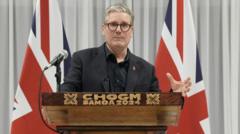
Article Text: Commonwealth leaders are calling for a significant conversation on reparations related to the slave trade during their recent summit in Samoa, despite the UK’s efforts to avoid the issue. A statement signed by 56 heads of government, including UK Prime Minister Sir Keir Starmer, recognizes the pressing need for dialogues on "reparatory justice" concerning the "abhorrent" transatlantic slave trade. Prime Minister Starmer admitted no financial discussions took place at the summit, stating the UK would "not pay reparations." Over recent years, there has been increasing pressure on the UK to apologize and pay reparations for its historical involvement in slavery. The reparations can take various forms, whether financial or symbolic. Prior to the summit, Downing Street emphasized that reparations would not be on the agenda. However, during a press conference, Starmer mentioned that the dominant topics were resilience and climate change, with reparations just a small part of the discussions. Despite the UK’s firm stand, the conversation is slowly evolving. Starmer suggested that further talks could happen at the upcoming UK-Caribbean forum in March, where foreign ministers hope to create a "comprehensive report" on reparations. Some advocates, including Frederick Mitchell from the Bahamas, believe that financial reparations will eventually be necessary for Caribbean nations. The landscape may change as diplomats anticipate reparatory justice becoming a hot topic in future Commonwealth meetings. Incoming Commonwealth secretary-general Shirley Ayorkor Botchwey has also shown support for reparations, advocating for tandem efforts in trade and education. This pivotal moment indicates that while the UK’s position may remain unchanged for now, the international dialogue around reparations is only beginning to flourish.