In brief
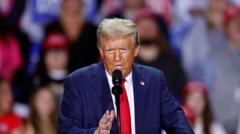
In a bid to stall TikTok's impending ban in the U.S., President-elect Donald Trump has urged the Supreme Court for a delay. This legal maneuver comes as the court is set to hear arguments related to a law that requires ByteDance, TikTok's Chinese parent company, to sell the app to an American firm by January 19. Trump's legal team insists that banning TikTok poses a significant challenge to free speech, pushing for more time to explore a political resolution. With TikTok enjoying immense popularity among U.S. users, concerns regarding its Chinese ownership and potential national security threats have sparked intense scrutiny from lawmakers. In a recent statement, Trump professed his fondness for TikTok, citing his success among younger voters during his presidency.
As TikTok faces possible restrictions, Trump aims to navigate the situation through legal channels and political strategies.The article text:Donald Trump, the President-elect of the United States, has made a significant move by urging the US Supreme Court to delay a possible ban on TikTok. His legal team submitted a brief on Friday, emphasizing that Trump is against banning the popular social media platform and wishes to find a political solution once he assumes office. A critical date is set for January 10, when the court will evaluate a law that mandates TikTok's Chinese parent company, ByteDance, to sell its American operations by January 19 or risk a complete ban.Accusations linking ByteDance to the Chinese government have ignited concern among US officials, alleging potential national security threats. This led to Congress passing a bill—signed into law by President Biden—that includes a divestment or banning requirement. Despite TikTok's attempts to challenge the legality of the law, they have seen little success in court. As of now, no buyers for TikTok have emerged, leaving the company with one last chance to push their case before the Supreme Court. Previously, the court denied an emergency request to block the law but has allowed the parties to argue their positions on January 10, precariously close to the looming deadline. Last week, Trump met with TikTok CEO Shou Zi Chew at Mar-a-Lago, perhaps hinting at his ongoing interest in the platform.In his court filing, Trump articulated that the case reflects a unique clash between free speech rights and concerns surrounding foreign influence and national security. While he mentioned he holds no stance on the essential merits of the case, his request to extend the deadline could provide him the opportunity to seek resolution in a politically amicable way.The U.S. Justice Department has expressed its viewpoint that the alleged ties between TikTok and China pose a national security risk, resulting in various state governments raising alarms about the app's presence. Almost two dozen state attorneys general, led by Montana's Attorney General Austin Knudsen, are pressing the Supreme Court to back the divestment law, illustrating the bipartisan concern surrounding the platform.Earlier this month, a federal appeals court dismissed attempts to nullify the legislation, stating it was part of extensive action from Congress over successive administrations. Remarkably, although Trump endorsed a ban during his presidency, he now advocates against the very same, teasing his past advantages with younger audiences, even as he faced political rivals like Kamala Harris during the elections. "I have a warm spot in my heart for TikTok," Trump claimed, highlighting his previous electoral success among the youth demographic.