In brief
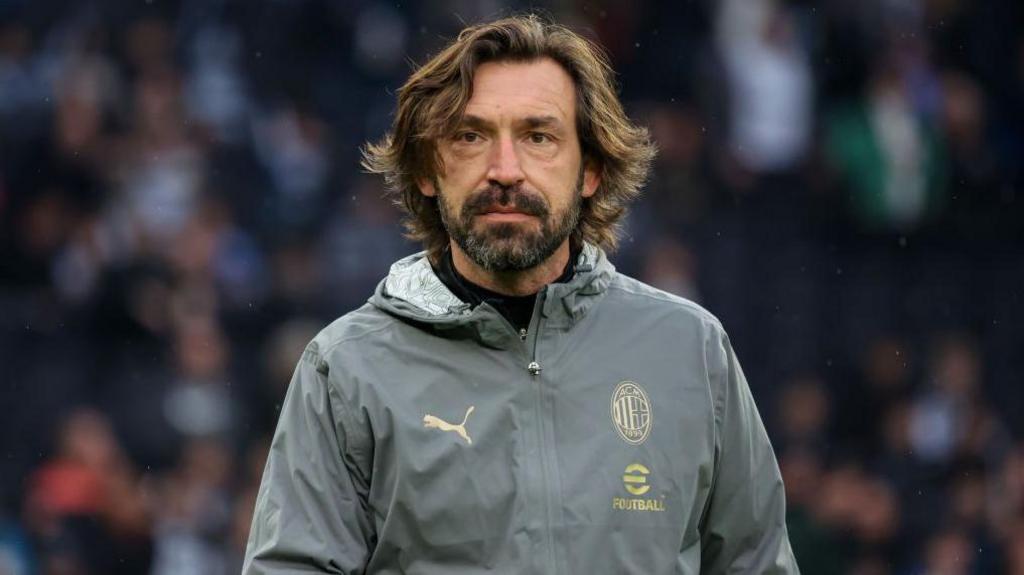
Andrea Pirlo has stepped away from the Italian national team head‑coach position after a wave of criticism revealed his ties to Russian betting firm Fonbet, where he served as global ambassador. The decision follows protests from Italian politicians who said any public figure linked to Russian interests should not hold national office. Despite warnings from parliament and sporting bodies, Pirlo insisted his partnership with Fonbet was purely commercial. The fallout threatens to destabilise the FIGC’s leadership, with technical director Paolo Maldini potentially resigning amid the controversy. Italy’s football community, already shaken by recent World Cup exit, is once again under pressure to navigate political and ethical scrutiny while preparing for future international competitions.
Andrea Pirlo has stepped aside as Italy’s expected next head coach after the revelation of his role as a global ambassador for the Russian betting company Fonbet. The move came after a surge of criticism from Italian politicians, who argued that any public personality with ties to Russian interests post‑2022 should not receive a national post.
Pirlo’s appointment was never formally confirmed by the Italian Football Federation (FIGC) but was being treated as virtually certain. His connection with Fonbet was highlighted when he appeared at a series of pro‑Kremlin events in Moscow, including a signing session at Luzhniki Stadium with former teammate Marco Materazzi. The betting firm also sponsors sporting gatherings involving veterans of the war in Ukraine.
In Monday’s Instagram statement, Pirlo said, “Over the last few days I watched, with great bitterness, the debate that swirled around my name,” and clarified that his involvement with Fonbet was strictly commercial and sporting. He added, “To assign a political meaning to that collaboration means ascribing to me beliefs which I have never expressed and that do not belong to me.”
The controversy has reverberated beyond Pirlo. European Parliament vice‑president Pina Picierno stated that Italy’s football “needs a cultural, ethical and managerial revolution,” criticizing the choice that “goes in the exact opposite direction.” In contrast, the Russian ambassador in Rome, Aleksey Paramonov, expressed sadness that Pirlo was ostracised in his own country despite his “extraordinary contribution to world sport.”
On the safety of the FIGC’s cabinet, there are growing rumours that technical director Paolo Maldini, who has only been in post since 11 July, might resign if the federation cannot settle the situation. Maldini and his adviser Leonardo were tasked with pinpointing a new head coach before Italy faces a Nations League group that includes France, Belgium and Turkey in the autumn and then aims to qualify for Euro 2028.
Italy’s football scene is already at a crossroads after failing to qualify for its third consecutive World Cup. The team’s loss on penalties to Bosnia‑Herzegovina in April prompted coach Gennaro Gattuso to step down, and the federation underwent an extensive reshuffle. Notably, high‑profile figures such as Pep Guardiola and Carlo Ancelotti were approached earlier this year before Pirlo’s offer. Other potential candidates for the head‑coach slot include Antonio Conte and former Italy coach Roberto Mancini, who led the national side to Euro 2020 glory but missed out on World Cup qualification in Qatar and subsequently took the Saudi Arabian job.