In brief
Amid the rubble of Gaza, software engineers like Walaa Volidis, Tarik Zaeem, and Mahran Bayed are turning distant video calls into real jobs. Using co‑working spaces powered by generators and solar panels, they keep their skills sharp and earn a living on the world’s freelance market, despite broken power and payment hurdles. These digital lifelines not only supply income but also restore dignity and possibilities for displaced families, illustrating resilience in the face of war.
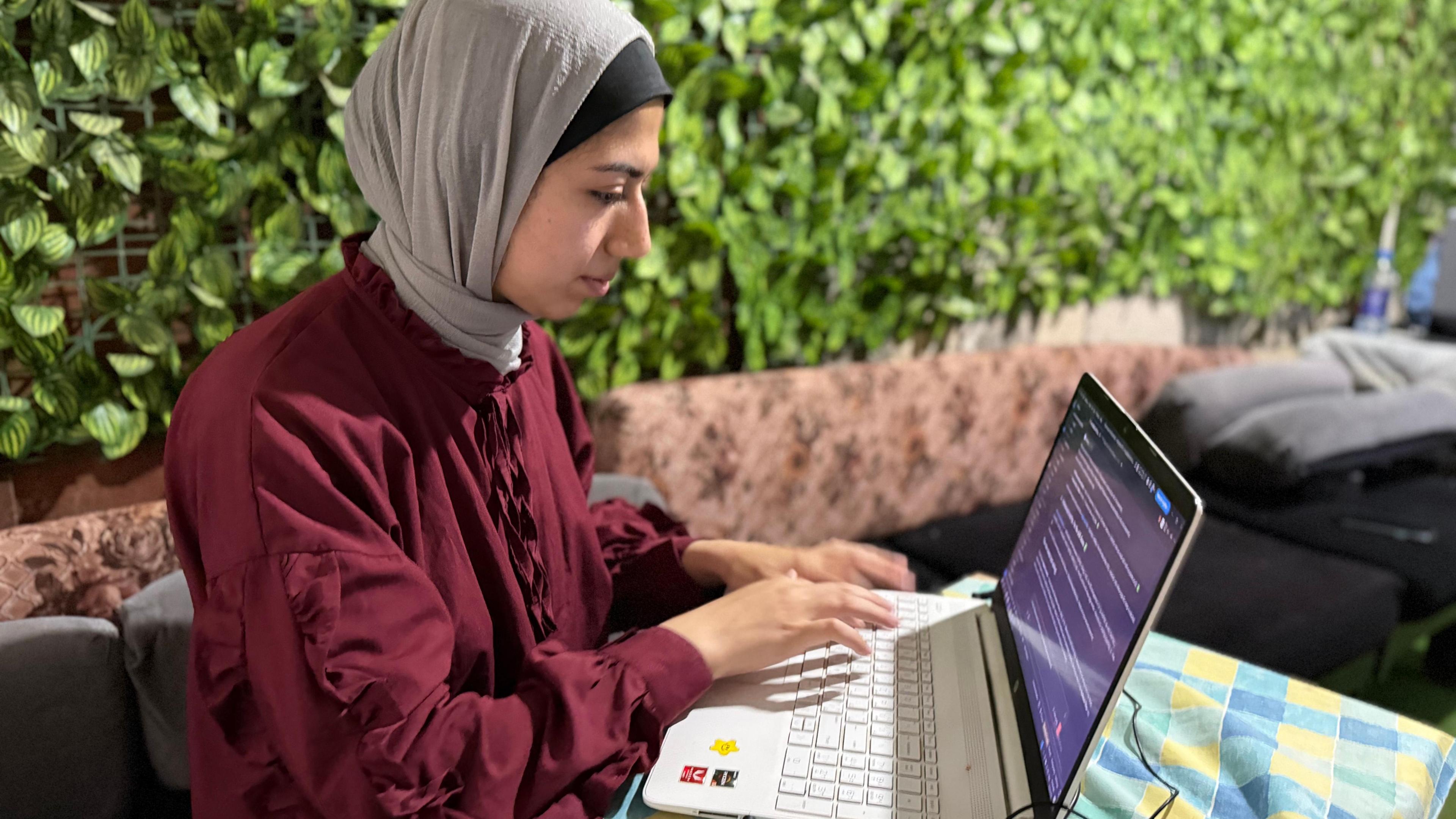
Walaa Volidis sits in a cramped tent in Deir al‑Balah, her laptop glowing in the night. A face‑to‑face call with a mentor in California bridges continents, while her helmet‑shaped headset keeps her tuned into a world that still exists beyond the shell shock of war. She tells us, ‘I was just in a trough, drowning in uncertainty. But deep inside, I made a decision: it will not be the end, no matter how hard it gets. I’ll keep fighting for my dreams.’
Walaa is only 24, yet she has turned her broken university life into a code‑fuelled career. Joined by support from Dutch NGO TAP, she recently secured a full‑time role with a Dubai‑based firm and is now negotiating a medical evacuation for her 13‑year‑old sister who suffers from lymphoedema.
Beyond Walaa, thousands of young Gazans have found refuge in newly built co‑working spaces that run on generators and solar panels. Tarik Zaeem, a 44‑year‑old former CTO, now freelances a mobile‑app for a Saudi client, earning just enough to send his wife and three children to Egypt. Mahran Bayed, living next to the ruins of Al‑Shifa hospital, keeps his broken laptop screen in a trusty external monitor as he writes code for a U.S. client, hoping to prove that his environment can’t silence him.
Digital work is a lifeline in a place where 80‑plus percent of the two million people are unemployed. Humanitarian groups say remote freelancing offers the best wages under the rubble, and Mercy Corps – which helped create Gaza Sky Geeks back in 2012 – now runs workshops that repair damaged machines from spare parts. Despite the Israeli blockade and restrictions on bank transfers, a network of friends abroad brokers payments so engineers can keep a paycheck, even if they lose half the money each time.
The future may still look uncertain, but the screen‑lit faces in Gaza’s co‑working halls remind us of a new possibility – that knowledge and effort can build a bright tomorrow, even when the bombs fall. These engineers are turning their lives into a lesson on resilience, and rewriting what it means to be productive in a conflict zone.