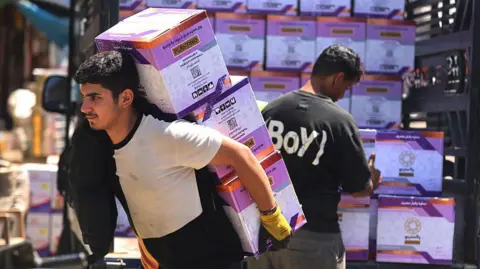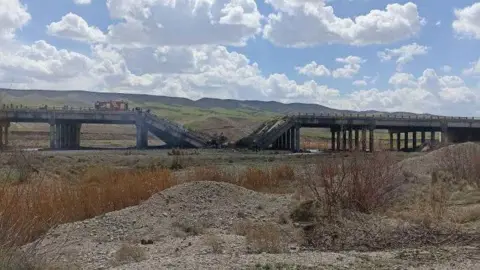
On the plains of northwestern Iran, the onset of spring has brought not just warmer weather but a fragile ceasefire that allows more traffic on highways and Iranians to return home. Among them is a grey-haired banker who recounted his time in Turkey during the recent conflict, reflecting on how the Israeli and American strikes primarily targeted military centers rather than civilian locations.
As people navigate their return, sentiments of fear and uncertainty linger. An elderly woman expressed her worries about the dangers faced by young Iranians amidst military tensions and the lurking presence of paramilitary forces. It's all in God's hands, she murmured, suggesting uncertainty continues to overshadow their lives.
Conversely, younger residents like a young woman in a bright red jacket remarked, Of course, the ceasefire won't hold, highlighting a skepticism towards lasting peace, given Iran's strategic interests in the Strait of Hormuz.
The landscape reflects a nation grappling with its future, where discussions are ongoing about a potential deal between the US and Iranian officials in Islamabad, and hints at a negotiation framework under the guise of resolving hostilities. However, skepticism remains rampant among citizens who are wary of the stark demands being set forth, including Iran's nuclear aspirations and control over shipping lanes.
This fragile moment finds itself juxtaposed with the rich history of Iran, facing modern political dilemmas while navigating through the cultural and historic richness that is evident in the daily lives of its people. From citizens' aspirations for peace to ongoing military threats, Iranians are left contemplating whether any deal could truly lead to the change they desperately seek.
As people navigate their return, sentiments of fear and uncertainty linger. An elderly woman expressed her worries about the dangers faced by young Iranians amidst military tensions and the lurking presence of paramilitary forces. It's all in God's hands, she murmured, suggesting uncertainty continues to overshadow their lives.
Conversely, younger residents like a young woman in a bright red jacket remarked, Of course, the ceasefire won't hold, highlighting a skepticism towards lasting peace, given Iran's strategic interests in the Strait of Hormuz.
The landscape reflects a nation grappling with its future, where discussions are ongoing about a potential deal between the US and Iranian officials in Islamabad, and hints at a negotiation framework under the guise of resolving hostilities. However, skepticism remains rampant among citizens who are wary of the stark demands being set forth, including Iran's nuclear aspirations and control over shipping lanes.
This fragile moment finds itself juxtaposed with the rich history of Iran, facing modern political dilemmas while navigating through the cultural and historic richness that is evident in the daily lives of its people. From citizens' aspirations for peace to ongoing military threats, Iranians are left contemplating whether any deal could truly lead to the change they desperately seek.