In brief
The massive iceberg, A23a, poses a significant risk to penguins and seals on South Georgia as it drifts from Antarctica.
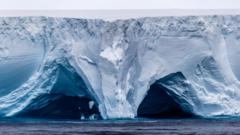
The world's largest iceberg is making its way toward South Georgia, a remote British territory known for its diverse wildlife, putting local penguins and seals at risk. Currently 173 miles away, this colossal ice mass, A23a, is spinning northwards and may soon ground, threatening the feeding grounds of many marine creatures. In the past, similar icebergs have wreaked havoc on local wildlife, leading to the death of countless birds and seals.Scientists and sailors are closely monitoring the iceberg's movements through satellite images, having watched it break free from the Filchner Ice Shelf in Antarctica last December. Once measuring about 3,900 square kilometers, recent satellite data shows it has shrunk to approximately 3,500 square kilometers—a size comparable to Cornwall in England. Experts express grave concerns, as the iceberg’s deterioration leads to chunks breaking off, creating floating ice masses that could linger in the area for years. This isn’t the first incident of giant icebergs threatening South Georgia; previous encounters have resulted in significant losses among penguin and seal populations.The looming presence of A23a has prompted local fishermen and sailors to be extra cautious, employing searchlights at night to identify and navigate around ice hazards. With climate change contributing to rising ocean temperatures, the rate of iceberg calving from Antarctica is expected to grow, resulting in more icebergs like A23a in the future.Interestingly, A23a is providing scientists with a unique opportunity to study its effects on the southern ocean's ecosystem. Researchers from the British Antarctic Survey recently gathered data on how melting icebergs influence the carbon cycle, as they introduce nutrients and chemicals into the ocean.As this massive iceberg approaches South Georgia, it remains unpredictable in its trajectory, presenting both a stunning spectacle and a dire threat to the local marine wildlife.