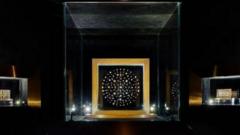
The Indian government is taking a strong stance against Sotheby's upcoming auction of jewels linked to Buddha's remains, scheduled for Wednesday. Officials claim the sale, which features gems discovered over a century ago buried with Buddha's bone fragments, is a violation of Indian and international laws and UN conventions, and they are demanding the jewels' return to India.
In an Instagram post, the Ministry of Culture declared that the jewels must be recognized as sacred and are not merely tradeable artifacts. The heir to the jewels, Chris Peppé, has been identified as a descendant of the original excavator, William Claxton Peppé, who uncovered the relics in 1898 in Piprahwa, near Lumbini—Buddha's alleged birthplace.
While Sotheby's has responded, assuring they are reviewing the legal notice, Indian officials argue that Peppé does not have the right to sell these relics, calling the auction a case of "continued colonial exploitation." The gems were handed to British authorities back in the colonial era, with most relics sent to the Indian Museum in Kolkata.
The Ministry further criticized how the Peppé family labels these items as "duplicates," asserting that they form part of India's vital cultural and religious heritage. They have demanded a public apology from Sotheby's and full transparency regarding the gems' ownership history. If not met, the Indian government threatens legal proceedings in both India and Hong Kong, alongside a public campaign against Sotheby's.
Meanwhile, Chris Peppé insists on auctioning the gems, believing it's the most transparent way to transfer ownership to Buddhists. The Peppé family has been actively showcasing the gems and has even set up a website detailing their research, but the Ministry of Culture remains concerned about "monetizing" the jewels amidst ongoing discussions about their rightful custodianship.