In brief
Trump's recent address at the World Economic Forum raises alarms about global trade and economic stability, with a blend of charm and intimidation.
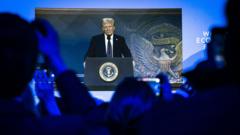
In the picturesque Swiss town of Davos, world leaders and corporate giants gathered for the annual World Economic Forum, while across the ocean, President Donald Trump sought to redefine America's global stance. "Nothing will stand in our way," Trump proclaimed during a remote address, presenting a vision of a thriving U.S. economy ready to dominate the tech landscape.However, his speech came with a twist of tension, threatening hefty tariffs on any businesses that failed to bring their operations back to the U.S. Amidst nods from the Davos crowd, Trump made waves by suggesting that Canada could merge into the U.S. to escape tariffs—a remark that drew gasps from the audience.This collision of ideologies—Trump's "America First" doctrine meeting the established international economic order—poses critical questions about the future of global trade. While he entertained with ambitious plans to lower energy prices and curb Russian influence, many delegates contemplated the potential repercussions of his stance on the trading system.Throughout the forum, top executives nervously evaluated Trump's threats and their implications, as discussions around possible retaliatory tariffs emerged. U.S. CEOs expressed concern regarding a tit-for-tat scenario, leaving uncertainty in the air. However, as some leaders sought to maintain dialogue, Canada began formulating their own potential countermeasures.In this ambiguous environment, Trump's ambitions for U.S. tech supremacy are being cross-examined, especially as European nations sense an opportunity to attract top talent disenchanted with the current U.S. policies. The outcome of the Davos deliberations could chart a new course in global economics, as the world prepares for Trump's impact on trade relations in the upcoming years.