In brief
The country is investing heavily in AI to innovate and educate, while facing international scrutiny over data privacy issues.
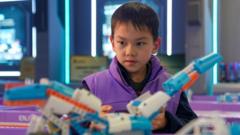
In a bustling Beijing apartment, eight-year-old Timmy engaged in a game of chess with his AI-powered robot friend, showcasing China's growing engagement with artificial intelligence (AI). This experience reflects a broader trend as China strives to position itself as a global tech leader by 2030. A notable player, the chatbot DeepSeek, captured worldwide attention in January, sparking significant investments in the AI industry with over 4,500 startups now in the field.Timmy’s mother, Yan Xue, expressed optimism towards AI, seeing it as a natural part of her son's education. She emphasized early exposure, indicating that children should learn alongside evolving technology. The Chinese government echoes this sentiment, designating AI as a critical driver for future growth.As the nation amplifies AI funding—recently earmarking a staggering 10 trillion yuan ($1.4 trillion) for advanced tech—competition with the U.S. intensifies. With a vast pool of STEM graduates, China's engineering prowess has already begun yielding impressive results. For instance, SenseRobot, the company behind Timmy's robot, has sold over 100,000 units, surprising many with its success in foreign markets.At an AI fair in Shanghai, innovators showcased remarkable creations, from search-and-rescue robots to AI-driven educational toys designed to teach coding to young children. This surge in development signals a significant shift in how Chinese firms are perceived globally, as they earn titles like China’s "six little dragons" for their rapid advancements in AI.However, as AI technologies flourish, worries persist over user data privacy and the potential for government surveillance, particularly concerning platforms like DeepSeek and TikTok. Concerns have prompted bans in countries like South Korea and restrictions on government devices in Taiwan and Australia.Despite these challenges, Chinese companies remain resolute in their vision to leverage AI across various sectors, focusing on innovation and cost reduction. "Artificial engineering" is now a buzzword in manufacturing, driving down robotics costs dramatically. In doing so, China's ambitions for self-reliance in technology grow stronger.President Xi Jinping has emphasized this technological marathon, urging patience as the nation pursues its goal of becoming a leader in AI while grappling with international scrutiny and internal challenges.