In brief
Farmers in the Northeast are experiencing a challenging spring as early warmth prompts flowers and fruits to bloom prematurely, only to be threatened by cold nights. With average last frost dates varying from mid-April to early June, many are worried about crop damage. New England saw 80-degree temperatures followed by snow days later, prompting freeze warnings in multiple states, leading farmers to adapt their harvesting strategies to avoid loss.
BRIDPORT, Vt. (AP) — An abrupt swing from hot weather to cold across the Northeast is frustrating some flower and fruit farmers who have had to either harvest blooms extra early or fear they could lose some crops altogether.
Frosty nights aren’t unusual this time of year, but this season has been particularly challenging. Across the region, the average date of the last frost ranges from mid-April to early June. Warm temperatures in early April were followed by abrupt drop-offs leading to frost warnings in various states like Ohio, Pennsylvania, and North Carolina.
In Ohio, warm days got peach and apple trees blooming ahead of schedule, but the later cold snap destroyed one variety of peach at Apple Hill Orchards. Owner Anne Joudrey expressed concern over the unpredictability of farming this season.
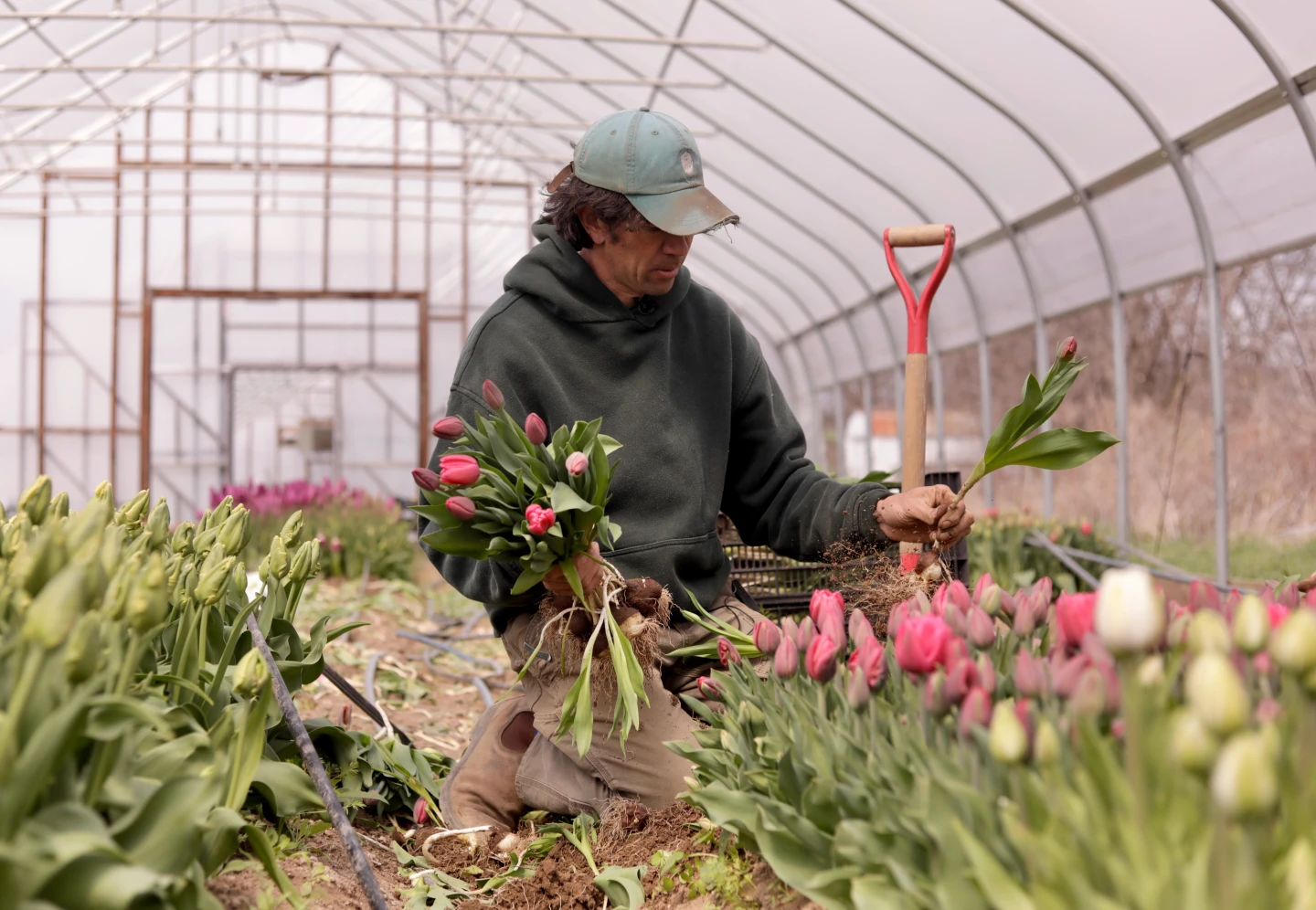
In Vermont, Gregory Witscher of Understory Farm noted that tulips intended for Mother's Day are already blooming in his greenhouses, forcing a scramble to harvest early and store them until they can be sold. As the weather grows more unstable, farmers are increasingly adopting protective measures like row covers and heaters to safeguard their crops.
Witscher remarked on the importance of flexibility in farming, highlighting how dynamic weather patterns challenge traditional practices. “The longer I do this, the more options I want to have to be nimble and adaptable,” he stated.