In brief
US diplomats landed in Kyiv on a train to avoid drones and met with President Volodymyr Zelensky at Saint Sophia Cathedral, where officials hoped for peace. The visit was full of symbolism – from the cathedral’s ancient stones to the short pause in air‑strikes that promised a brief respite for city residents. Yet the discussions exposed hard‑to‑bridge differences: Moscow says it has made tangible advances, while Kyiv asserts it gained territory and deals for security guarantees will still need a strong army. Former U.S. Special Envoy Steve Witkoff said progress was there, but neither side appears ready for significant concessions. The talks signal a hopeful, yet uncertain, path to a settlement as winter threatens the region.
The recent visit of U.S. diplomats to Kyiv sparked hopeful headlines. A train carried the envoys instead of a plane, a move designed to bypass the Russian drones that have crossed the border in the last weeks. Their arrival was a symbolic check‑mark for many observers who saw it as a step toward peace.
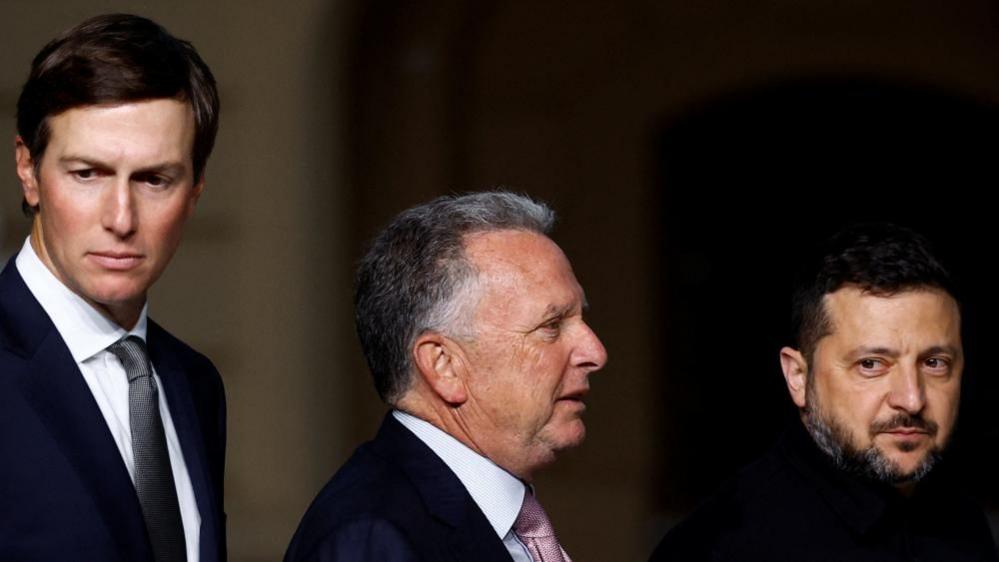
The diplomats were greeted by President Volodymyr Zelensky inside Saint Sophia Cathedral, a site steeped in Ukrainian history and only a stone’s throw from a place that suffered a drone attack last month. The meeting was etched with historic imagery – a church that survived a war of a different kind long before this conflict.
Both sides spoke warmly after several hours of talk and acknowledged that a truce had been mutual in the air‑strike arena. This brief pause gave Kyiv residents a moment of calm, a rare comfort in an otherwise tense cityscape.
However, fundamental issues remain. Moscow’s commander says Russia has made “tangible advances.” Ukraine counters that it has gained more territory since August and wants secure guarantees backed by a stronger army. Zelensky debated the delicate issue of territory – a fact that renders next‑season settlement uncertain.
The U.S. envoy, Steve Witkoff, highlighted progress but admitted both sides have to make concessions that seem unlikely at the moment. For now, the question stands: will the next winter see a continuation of war or a new window for talks? The short‑term pause doesn’t promise a lasting ceasefire, but the symbolic gestures show that dialogue is still alive.