In brief
Experts cite nuclear threats, climate change, and AI risks as critical factors driving this alarming decision.
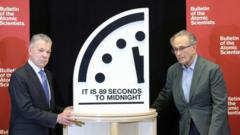
The Bulletin of the Atomic Scientists (BAS) has officially moved the Doomsday Clock to a shocking 89 seconds before midnight, its closest position to "destruction" in history. This tick forward serves as a stark reminder of the escalating dangers facing humanity, including nuclear threats, climate change, and the risks associated with artificial intelligence. Daniel Holz, chair of the BAS's Science and Security Board, emphasized that this shift hints at serious global risk and signals to world leaders that action is urgent. Since its debut in 1947, the clock's time has been adjusted based on perceived threats, and it was previously set at 90 seconds before this recent change. The BAS underscored that ongoing conflicts, particularly the war in Ukraine, could inadvertently escalate to nuclear confrontation, while tensions in the Middle East might lead to widespread conflict. Additionally, the fight against climate change struggles as most governments fail to implement necessary actions to mitigate global warming. Moreover, emerging health threats pose economic risks, while advancements in military applications of artificial intelligence raise concerns for future conflicts. Misinformation and conspiracy theories further complicate the situation, creating an even greater threat multiplier. Ultimately, the BAS highlighted that nuclear capabilities held by the US, China, and Russia place the world at a critical junction, stressing that these nations have a formidable responsibility to steer humanity away from potential catastrophe.