In brief
In a symbolic move tied to a heated trade dispute, President Trump signed an executive order to rename Lake Ontario as Lake America. The new 50% tariff on $20 billion of Canadian goods and Canada’s planned counter‑tariff sparked the gesture, which Canada dismissed as a unilateral act that does not alter the lake’s historic name. The renaming follows Trump’s earlier change of the Gulf of Mexico to the Gulf of America, pushing back against shared water boundaries. Diplomats warn the move has no diplomatic weight but inflames North‑American relations. The gesture highlights Trump’s pattern of using geography for political messaging, though only the United States will recognize the new name in its maps and official documents.
What happened?
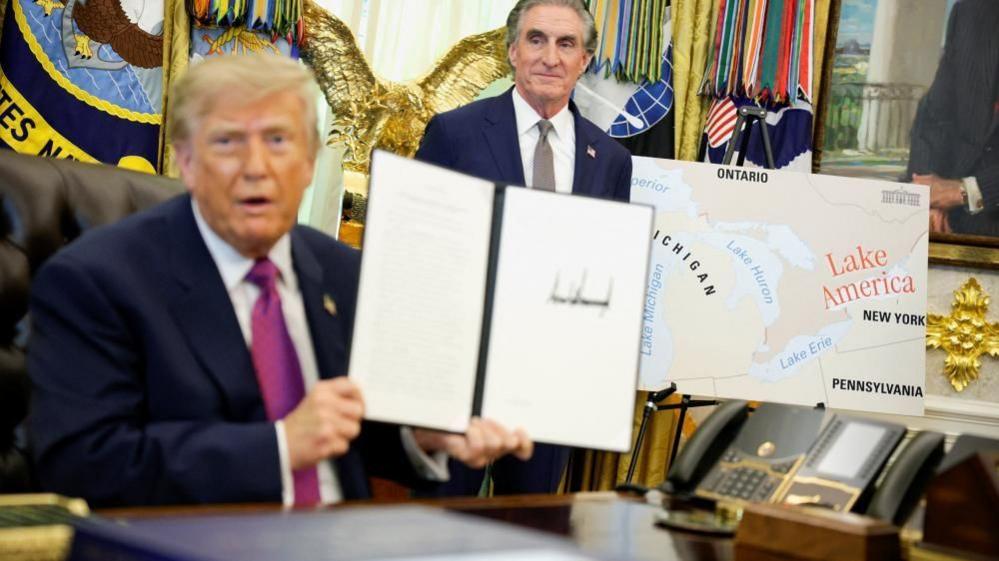
US President Donald Trump today signed an executive order renaming Lake Ontario to Lake America. The order was announced in the Oval Office and was described by Trump as “effective immediately.”
Why the change?
The rename came after trade talks between the US and Canada collapsed last week. The US imposed a 50% tariff on $20 billion of Canadian goods, and Canada announced a dollar‑for‑dollar counter‑tariff next month.
Trump has repeatedly threatened to rename the lake in the past, sparking social media confusion and adding to the tension. He said the move was not a direct message to Canada but a response to long‑standing trade grievances.
Canada’s response
Canadian Prime Minister Mark Carney and Industry Minister Melanie Joly both said Canada will never accept the new name. Joly stated, “We’ll always call it Lake Ontario.” Canadians pointed out the lake’s name dates back more than 400 years and has been used since before the Confederation and the US Declaration of Independence.
Historical context
Lake Ontario is the smallest of the Great Lakes and sits on the border between Canada’s Ontario province and New York State. The names of Oregon, Huron, Michigan, and Erie come from Indigenous languages, while Lake Superior was named after a French word.
What’s next?
The US Department of the Interior is set to update maps and the Geographic Names Information Service with the new name. Google Maps already reflects the change in the US, while in Mexico it remains “Gulf of Mexico.” Canada remains silent on the renaming, maintaining its original designation.
Other officials in the US say the rename is “an indirect political statement” rather than a direct attack, and that it may open a door to future negotiations. However, the tension over tariffs and trade policy continues, with neither side having firmly stepped away from the conflict as of now.