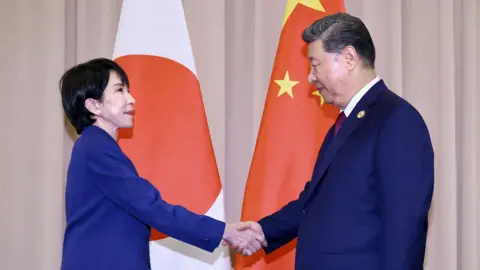
China has summoned the Japanese ambassador in Beijing over Prime Minister Sanae Takaichi's comments on Taiwan.
Takaichi suggested that Japan could respond with its own self-defense force if China attacked Taiwan, sparking an escalating war of words between the two nations.
Both countries' foreign ministries have lodged serious protests against one another. A Chinese diplomat made a controversial comment interpreted by some as a threat, adding fuel to the fire.
This diplomatic spat recalls historical animosities between China and Japan, reflecting deeper sensitivities around the sovereignty of Taiwan, which China considers part of its territory.
What Happened? A Timeline
The tensions began at a parliamentary meeting when Takaichi was asked what would constitute a survival-threatening situation for Japan regarding Taiwan. Takaichi's remarks drew swift condemnation from Beijing, marking a notable shift in Japan's traditionally ambiguous stance on Taiwan.
In response, Beijing's foreign ministry labeled Takaichi's words as 'egregious', and a Chinese consul general made a threatening comment on social media about cutting off the 'dirty head' that sticks into the matter.
Both sides have since lodged protests to each other, emphasizing the deep-seated historical grievances that complicate their diplomatic relationship.
A Long History of Animosity
Longstanding animosity between China and Japan dates back to numerous conflicts and Japan's wartime actions in China. For instance, China's Ministry of Foreign Affairs has warned Japan against military intervention in Taiwan, emphasizing that past lessons should not be forgotten.
Takaichi's hawkish stance on China, as well as her defense in support of Taiwan, complicates the situation further, with Beijing keeping a close watch on Japan's military engagements.
Why Takaichi's Recent Comments Caused Such a Stir
Takaichi's comments signify a departure from Japan's strategic ambiguity, creating a more assertive narrative around Taiwan's status. This is a marked contrast from the U.S.'s traditional vague approach regarding intervention, leaving an open question about how Japan might respond if tensions continue to mount.