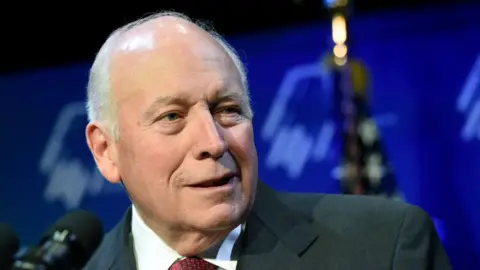
Former U.S. Vice-President Dick Cheney, a pivotal architect behind the George W. Bush administration's 'war on terror,' has died at 84 years of age due to pneumonia complications and other health issues. Cheney's tenure as Vice President transformed the role into a powerful position, especially post-9/11, where he played a critical role in significant foreign policy decisions, including the invasion of Iraq in 2003 under the belief that Saddam Hussein possessed weapons of mass destruction—a claim that has been widely discredited.
Born in Lincoln, Nebraska in 1941, Cheney didn't complete his education at Yale but eventually earned a Master's degree from the University of Wyoming. His political journey began in Washington in 1968, and he served various roles, including the White House Chief of Staff under Gerald Ford and later Secretary of Defense during the Gulf War in the early 1990s.
Cheney's complex legacy also included becoming a vocal critic of his party under Donald Trump, even supporting the Democratic candidate Kamala Harris in the 2020 election. His family remembered him as a man of great character, dedicated to teaching his family to love and honor their country.
Despite his achievements, Cheney's close ties to controversial military actions left a divisive legacy, shaping ongoing debates about America's role in global conflicts. As the news of his passing spreads, many reflect on the heavy impact of his policies and the polarized feelings they evoke across the political spectrum.
Born in Lincoln, Nebraska in 1941, Cheney didn't complete his education at Yale but eventually earned a Master's degree from the University of Wyoming. His political journey began in Washington in 1968, and he served various roles, including the White House Chief of Staff under Gerald Ford and later Secretary of Defense during the Gulf War in the early 1990s.
Cheney's complex legacy also included becoming a vocal critic of his party under Donald Trump, even supporting the Democratic candidate Kamala Harris in the 2020 election. His family remembered him as a man of great character, dedicated to teaching his family to love and honor their country.
Despite his achievements, Cheney's close ties to controversial military actions left a divisive legacy, shaping ongoing debates about America's role in global conflicts. As the news of his passing spreads, many reflect on the heavy impact of his policies and the polarized feelings they evoke across the political spectrum.