In brief
Panama's Supreme Court has annulled contracts allowing CK Hutchison, a Hong Kong firm, to operate container ports on the Panama Canal, citing unconstitutional laws. This decision follows US political claims regarding the influence of China over the canal, raising concerns about international trade dynamics. CK Hutchison, which has operated the ports since the 1990s, disagrees with the ruling, suggesting it jeopardizes thousands of jobs and investments. The court's ruling is expected to influence future negotiations around the canal's operations and control.
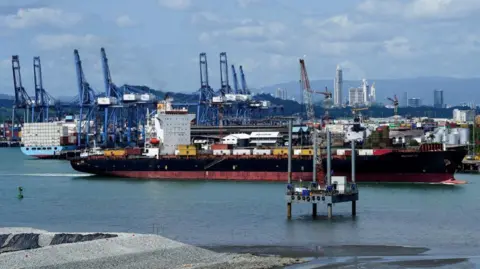
In a significant legal development, Panama's Supreme Court has annulled contracts that allowed a Hong Kong-based company, CK Hutchison, to operate key container ports along the Panama Canal. This ruling comes amid ongoing geopolitical discussions about China's influence over this vital shipping route, which connects the Atlantic and Pacific oceans.CK Hutchison, whose subsidiary Panama Ports Company (PPC) has overseen operations for decades, expressed strong disagreement with the Supreme Court's decision, arguing that it 'lacks legal basis' and could endanger jobs and investments tied to port activities. The company highlighted that it has invested more than $1.8 billion in infrastructure since commencing operations in the 1990s.The court's decision was described as a victory for those concerned about Chinese control in the region, aligning with past remarks by former US President Donald Trump, who claimed that the Panama Canal was under Chinese control. In light of these claims, US officials have urged Panama to reduce foreign influence within the canal's operations.As a result of the ruling, CK Hutchison’s shares dropped by 4.6% within Hong Kong trading, a reflection of market concerns regarding political risks associated with international trade. The Panama Canal is a critical passage for around 14,000 ships each year, handling approximately 5% of global maritime trade volume. Despite the ruling, Panama's government has consistently maintained that control of the canal remains in its own hands, rejecting allegations of Chinese dominance.