In brief
Bangladesh is taking urgent steps to pay off a massive $800 million debt to Adani Power after the Indian company slashed its electricity supply to the country. The government is currently processing partial payments and aiming to negotiate a smoother payment plan.
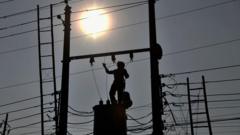
Bangladesh is struggling with severe power shortages and has ramped up payments in recent months while also exploring alternative energy sources to stabilize its electricity supply.Bangladesh is ramping up payments to Adani Power after the Indian conglomerate cut electricity supplies by half, reportedly over an unpaid $800m bill. Two senior government officials told the BBC they are already processing partial payments to Adani, which supplies 10% of the electricity used by Bangladesh. “We have addressed payment glitches and already issued a $170 million [£143m] letter of credit to Adani group,” a senior Bangladesh Power Development Board official told the BBC. Adani supplies electricity to Bangladesh from its 1600 megawatt coal-fired plant in eastern India. The company hasn't responded to BBC queries about cuts to its supply to Bangladesh, which suffers regular power shortages. Officials say the company has threatened to suspend all supplies if the money owed to it is not cleared by 7 November. But the Bangladesh Power Development Board official said they did "not believe it would not come to a stage where full supplies are cut off". Bangladesh officials told the BBC they will make payments gradually and regularly and are confident of resolving the payment crisis. “We are shocked and surprised that despite us ramping up payments, supplies have been cut. We are ready to repay and will make alternate arrangements, but will not let any power producer hold us hostage and blackmail us,” said Fouzul Kabir Khan, energy advisor to the interim government. Bangladesh stepped up repayments from $35m in July, to $68m in September, and $97m in October, he said. The country is already suffering from increased power shortages in rural areas. Political turmoil has left Bangladesh struggling to generate dollar revenues needed for costly imports like electricity and coal. Foreign currency reserves fell during months of student-led protests that ousted the Sheikh Hasina government in August. The interim government is seeking an additional $3bn loan from the International Monetary Fund (IMF) in addition to its existing $4.7bn bailout package. Adani’s power deal with Bangladesh, signed in 2015, has faced criticism as opaque under the current interim government, which is reassessing 11 previous deals, including the one with Adani. Besides Adani Power, other Indian state-owned firms like NTPC Ltd and PTC India Ltd are also involved in power supply to Bangladesh. Power Development Board officials confirmed that partial payments to these other suppliers are also being made. To address supply shortages, Bangladesh is restarting gas-fired and oil-fired plants, although this is expected to increase electricity costs. With winter approaching, electricity demands may ease as air conditioners are switched off. Dr. Ajaj Hossain, an energy expert, noted that other coal-fired plants are running at only 50% capacity and the inability to secure enough coal due to dollar shortages makes it crucial to maintain power supplies from Adani, despite the higher cost compared to local producers. Bangladesh is also planning to launch its first nuclear power plant this December, which was built with Russian assistance, at a cost of $12.65bn, mainly financed by long-term Russian loans.