In brief
The former chief of Russia’s flagship independent newspaper, Novaya Gazeta, claims that the Kremlin’s war on Ukraine—and the war against journalists—cannot be called a victory. Muratov argues that Russia’s use of nuclear threats, the sealing of the newspaper’s print presses, and the arrest of dozens of reporters have turned the country into a prison for free speech. After winning the Nobel Peace Prize in 2021, he’s now labeled a foreign agent, yet he continues to document and fight for truth online using VPNs. With over a thousand political prisoners since 2022, the crackdown has reached a new level of severity, leaving even Nobel laureates cornered. His message to the reader: stand up for truth, speak out, and keep voices alive even behind walls.
Nobel Laureate Throws Light on Russia’s Dark Side
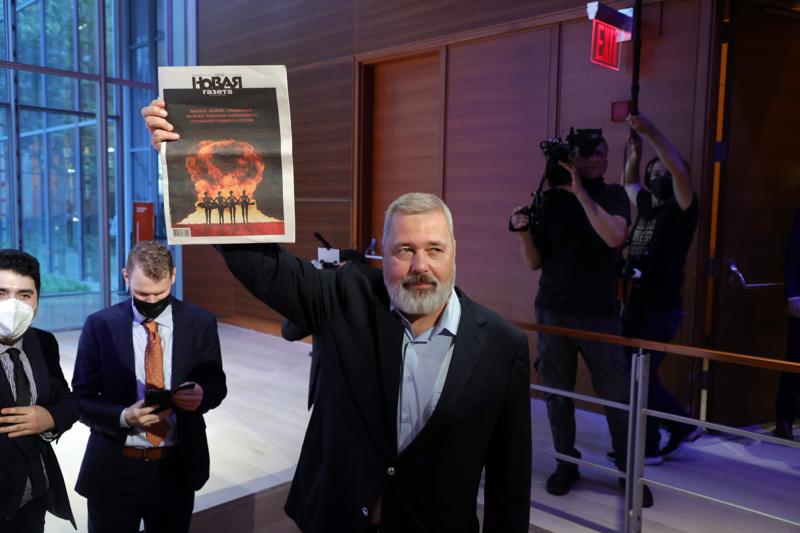
In the quiet hallway of Novaya Gazeta’s former office, you can still feel the echoes of sharp reporting—now just the whisper of emptiness. Dmitry Muratov, who once held a gold‑lit Nobel Peace Prize for protecting freedom of expression, says that the Kremlin’s war on Ukraine and the war on free press cannot be described as a visit to victory.
Muratov explains that the government nationalised the newspaper’s printing presses, revoked its registration and shut down its print & online services. While the site is still technically alive, it is blocked in Russia and can only be accessed from abroad or through a virtual private network.
Under the “foreign agent” banner, more than 1,500 critics have gone to jail—several hundred of whom are former journalists. A week in 2021, Muratov’s report highlighted the tragic fates of four reporters now imprisoned on extremism charges, and a 68‑year‑old Ukrainian‑born paediatrician sentenced to five years in a penal colony for criticizing the war.
If you think Putin’s narrative of a hammering victory is real, Muratov warns that no victory can be claimed when “two Slavic nations have ripped a million people to shreds.” He says: “It is unclear if the Kremlin will ever use nuclear war; the discussions—at least 500 times—point to the possibility, but the cost is unthinkable.”
Not surprisingly, Muratov’s own safety is now in question. He has been officially registered as a foreign agent, which limits his rights and brands him a societal enemy. Yet he continues to send hard‑looking photos of imprisoned journalists, a historic pianist who died in detainment, and the courthouse‑prison handcuffs that have become a symbol of abuse.
What does a Nobel laureate do when the world silences him? He holds the story up like a torch: “What worries me most right now is that no one in the world cares about the political prisoners who first spoke out against this war.” Call the authorities. Demand the truth.
For you to keep the conversation alive, share these stories, ask questions, and remember: every voice strong enough to speak out defines the future. The fight for truth isn’t a spectator sport. It’s a real‑life game where childhood curiosity meets global responsibility.