In brief
Last year marked the fastest destruction of the world’s tropical forests on record, with about 67,000 sq km lost, primarily due to fires. While Southeast Asia shows signs of success in conservation, the Amazon continues to face dire threats, with experts warning of a potential irrevocable decline in vital ecosystems.
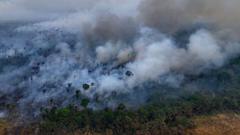
The world’s tropical forests, essential for combating climate change, faced unprecedented losses last year, according to new satellite analysis. Researchers estimate a staggering 67,000 square kilometers (26,000 sq miles) of these vital ecosystems were wiped out in just one year, equivalent to about 18 football pitches disappearing every minute.Fires became the leading cause of this deforestation, surpassing land cleared for agriculture for the first time. The Amazon rainforest suffered particularly, stricken by severe drought, making it susceptible to wildfires that have been increasingly intense in recent years.In Southeast Asia, however, there is a silver lining. Government policies aimed at curbing deforestation are showing positive results, with Indonesia reporting an 11% decrease in primary forest loss compared to the previous year.Tropical rainforests play a vital role in sequestering carbon, holding immense carbon stocks in their trees and soils. The unprecedented levels of deforestation not only threaten animal habitats but also aggravate climate change. Disturbingly, if global warming surpasses the critical threshold of 1.5C, some researchers warn the Amazon may face severe dieback, transitioning from lush rainforest to savanna terrain.This new data raises alarms regarding the future resilience of tropical forests on a warming planet, with experts fearing some forests may be nearing a "tipping point." Prof. Matthew Hansen of the University of Maryland describes the situation as "frightening," especially as record drought conditions bring back the fires with ferocity, exacerbated by climate change and the ongoing El Niño phenomenon.In total, the depletion of the world’s primary tropical forests released an estimated 3.1 billion tonnes of greenhouse gases, equivalent to the EU’s emissions. The ongoing loss highlights an alarming trend where forest-clearing for agricultural land is now compounded by rampant and more intense forest fires.Despite these grim statistics, the recent success in Southeast Asia shows that positive change is possible with strong political will. Countries like Indonesia are setting an example by implementing "no burning" laws that have effectively reduced deforestation. This approach demonstrates how sustained efforts in forest conservation may yield tangible results.As the upcoming UN climate summit COP30 approaches, discussions on innovative solutions, such as payment incentives for countries preserving forests, are pivotal. Without immediate and consistent action to protect these irreplaceable ecosystems, the consequences could be dire for our planet's climate and biodiversity.