
In brief
Following two intense no-confidence votes in France's National Assembly, Prime Minister Sébastien Lecornu has managed to retain his role, narrowly avoiding dismissal. Just five days after taking office, Lecornu faced a challenging political environment, including significant opposition to President Macron's controversial pension reform plans. In exchange for surviving this political ordeal, Lecornu has promised to suspend the raising of the retirement age from 62 to 64, a move designed to secure temporary support from the Socialist party. However, his concessions may complicate future budget discussions as he relinquishes some authority over parliamentary votes, leading to increased scrutiny from opposition parties.
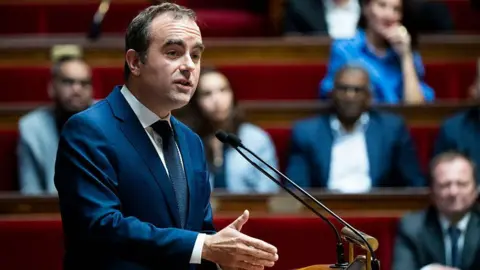
France's new prime minister, Sébastien Lecornu, has bought himself breathing space after winning two no-confidence motions tabled by the opposition.
In the tightest vote, a motion sponsored by the far left fell 18 votes short of the 289 needed to bring him down.
This means that after just five days in office, Lecornu has survived a first major ordeal in parliament and can now focus on the task of passing the 2026 budget.
However, any relief for the prime minister is likely to be short-lived, with the far left and far right still gunning to bring him down. The Socialists, who threw a lifeline in the no-confidence motions, have made clear they will not be so indulgent next time round.
Also, any tactical victory enabling the government to endure for now is more than offset by the huge damage to France's reputation caused by weeks of confusion and capitulation.
Appointed by President Emmanuel Macron four weeks ago, then re-appointed in chaotic scenes on Friday after he resigned on Monday, Lecornu only survives thanks to major concessions made to the left.
To buy the support of the Socialist Party, which has about 65 MPs, Lecornu promised to freeze Macron's most important economic reform of his second term – the raising of the retirement age to 64.
Moreover, Lecornu pledged not to resort to the constitutional device known as the 49:3, which allows governments to pass laws without a vote, thereby handing ultimate control over the budget to parliament parties.
This move signifies a major power shift, reflecting the decline of presidential authority since Macron’s botched parliamentary dissolution of July 2024 and potentially marks a return to the party politicking of France's past.
Though Lecornu aims to reduce the deficit by making savings of €30bn, he faces fierce opposition and disillusioned public sentiments, as Macron sees his popularity plummet amidst the ongoing political crisis.