In brief
When footage of a stray dog named Wang Wang and her puppies being cruelly killed by four boys upset millions, Beijing’s censorship machine went swift to scrub the story. Despite the ban, Chinese animal lovers erupted in outrage, demanding new cruelty‑law reforms. Far beyond the mainland, activists in New York, Taipei, Hong Kong and online communities turned the incident into a globally visible campaign, displaying Wang Wang’s image on giant screens, posting petitions, and translating the story into dozens of languages.
In June, a video of four boys, all under 14, harming a stray dog and her puppies went live online. The footage caused shock and fury across Chinese social media, but Beijing’s censorship team quickly began deleting screenshots and posting a statement that the videos were suppressed to protect the boys’ identity.
The officials demanded people stop sharing the content, citing a “good environment for minors” and even threatened cyber‑bullying. The move only intensified voices demanding that China adopt clear anti‑animal‑cruelty laws.
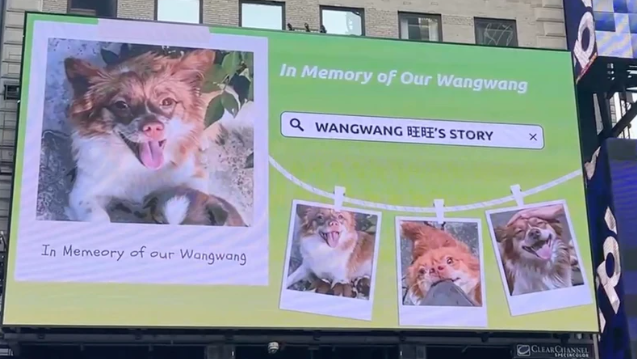
Outside mainland China, activists began a global movement. In New York’s Times Square, a digital billboard next to the famed crosswalk shows Wang Wang’s smile while the caption urges, “She was loved. She wanted to live.” Taipei’s skyline hosts a similar display on a building near Tiger 101, calling for “justice for Wang Wang.”
Taiwanese women CK and Elara have turned the incident into a cultural campaign, bringing the story to Reddit, X and translating it into Chinese, Japanese, Portuguese and Russian. Hong Kong groups have posted posters on buses, while online forums keep discussions alive with comments such as “Let’s keep posting!”.
Even local football fans in Dalian saw a cartoon of Wang and her puppies flash on a stadium screen, reminding players that “every life deserves respect.” Chinese brands and e‑commerce sites have joined the cause, featuring the dog’s image on storefronts and on Taobao stickers.
While official bans still limit where the story can be posted inside China, the multinational response shows the power of grassroots activism when issues touch the heart of people worldwide.