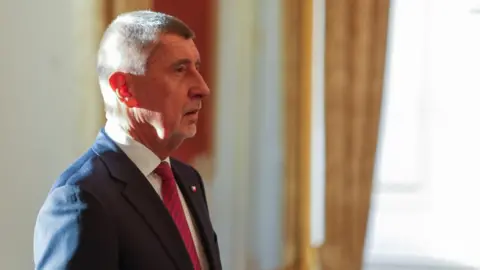
Billionaire Andrej Babis has been appointed as the Czech Republic's new prime minister, with his full cabinet expected to take office within days. His appointment followed a key demand from President Petr Pavel - a public pledge by Babis to relinquish control over his vast food-processing, agriculture and chemicals conglomerate Agrofert.
I promise to be a prime minister who defends the interests of all our citizens, at home and abroad, Babis said after the ceremony at Prague Castle. A prime minister who will work to make the Czech Republic the best place to live on the entire planet. These ambitions are ambitious, but Babis, 71, is used to thinking big.
Agrofert is so deeply embedded in the Czech commercial ecosystem that there is even an app to help shoppers avoid buying products made by the group's more than 200 subsidiaries. If a product - say Viennese-style sausages from Kostelecké uzeniny or sliced bread from Penam - belongs to an Agrofert company, a thumbs-down symbol appears.
Babis, who was prime minister for four years until 2021, has shifted to the right in recent years and his cabinet will include members of the far-right SPD and the Eurosceptic Motorists for Themselves party.
If he honors his pledge to divest from the company he built from scratch, he will no longer benefit from the sale of any Agrofert product – from frankfurters to fertilizsers. As prime minister he will have no knowledge of the conglomerate's financial health, nor any ability to influence its fortunes, he says.
Government decisions on public tenders or subsidies - Czech or European - will be taken without regard to a company he will no longer own or profit from, he adds. Babis states that Agrofert, worth an estimated $4.3bn (£3.3bn), will be placed in a trust managed by an independent administrator until his death.
However, critics, including Transparency International, are unconvinced about the effectiveness of Babis' proposed blind trust for managing Agrofert. Concerns over Babis’ vast influence on Czech society – extending beyond food to healthcare and retail businesses – highlight ongoing doubts about the separation between his public duties and private interests.
I promise to be a prime minister who defends the interests of all our citizens, at home and abroad, Babis said after the ceremony at Prague Castle. A prime minister who will work to make the Czech Republic the best place to live on the entire planet. These ambitions are ambitious, but Babis, 71, is used to thinking big.
Agrofert is so deeply embedded in the Czech commercial ecosystem that there is even an app to help shoppers avoid buying products made by the group's more than 200 subsidiaries. If a product - say Viennese-style sausages from Kostelecké uzeniny or sliced bread from Penam - belongs to an Agrofert company, a thumbs-down symbol appears.
Babis, who was prime minister for four years until 2021, has shifted to the right in recent years and his cabinet will include members of the far-right SPD and the Eurosceptic Motorists for Themselves party.
If he honors his pledge to divest from the company he built from scratch, he will no longer benefit from the sale of any Agrofert product – from frankfurters to fertilizsers. As prime minister he will have no knowledge of the conglomerate's financial health, nor any ability to influence its fortunes, he says.
Government decisions on public tenders or subsidies - Czech or European - will be taken without regard to a company he will no longer own or profit from, he adds. Babis states that Agrofert, worth an estimated $4.3bn (£3.3bn), will be placed in a trust managed by an independent administrator until his death.
However, critics, including Transparency International, are unconvinced about the effectiveness of Babis' proposed blind trust for managing Agrofert. Concerns over Babis’ vast influence on Czech society – extending beyond food to healthcare and retail businesses – highlight ongoing doubts about the separation between his public duties and private interests.