
In brief
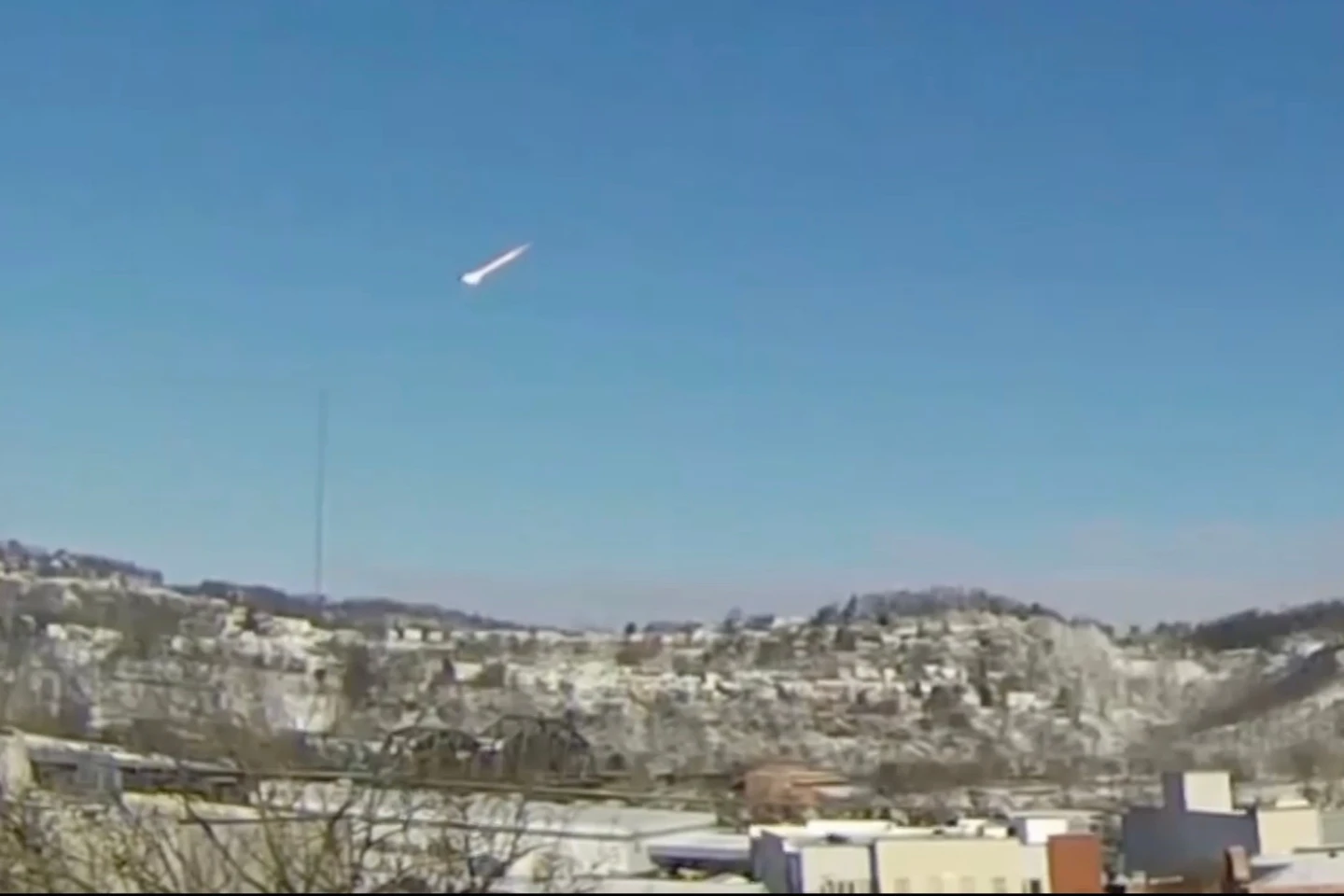
On Tuesday, a 7-ton meteor zoomed across the Cleveland sky at 45,000 mph, startling residents. The meteor, reported to be nearly 6 feet in diameter, broke apart with a boom that reverberated through the area, releasing energy equivalent to 250 tons of TNT. Seen from Wisconsin to Maryland, this fireball fragmented over Valley City. While some debris may have fallen, most of the meteor burned up in the atmosphere. Scientists track meteors with special cameras as more people capture these phenomena on their devices.
On the morning of Tuesday, residents in Cleveland, Ohio were in for a surprise as a 7-ton meteor streaked across the sky at an astonishing 45,000 miles per hour. The bright fireball and thunderous noise sparked fears of an explosion among locals, with many reporting sightings across several states from Wisconsin to Maryland.According to NASA, this meteor was about 6 feet in diameter and was classified as a fireball—a type of small asteroid. It was detected approximately 50 miles above Lake Erie, where it traveled over 34 miles through the upper atmosphere before breaking apart over Valley City. The meteor’s fragmentation unleashed energy equivalent to 250 tons of TNT, resulting in the loud boom heard by many.Meteorologist Brian Mitchell noted that while there may be some small fragments of the meteor, most of it likely incinerated before reaching the ground. Meteors fall to Earth around once a day in the U.S., with smaller pieces of space dust falling as frequently as ten times an hour. Scientists utilize a network of cameras to monitor these events, but the rise of personal mobile recordings is bringing even more attention to these amazing occurrences.