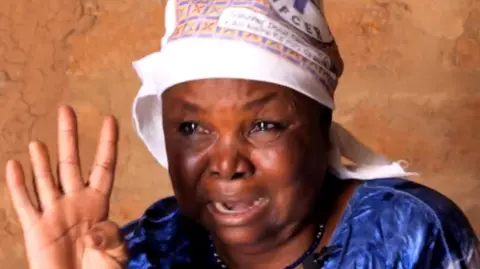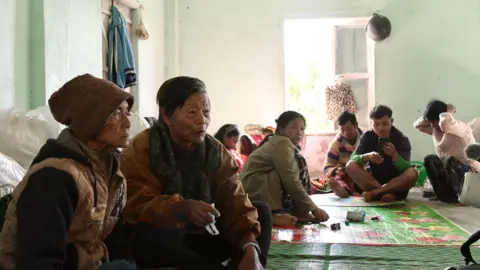
Late one night last month Iang Za Kim heard explosions in a neighbouring village, then fighter jets flying overhead. She ran out of her home to see smoke rising from a distance. 'We were terrified. We thought the junta's planes would bomb us too. So we grabbed what we could – some food and clothes and ran into the jungles surrounding our village.' Iang's face quivers as she recounts the story of what happened on November 26 in K-Haimual, her village in Myanmar's western Chin State, and then she breaks down. She's among thousands of civilians who've fled their homes in recent weeks after the Burmese military launched a fierce campaign of airstrikes and a ground offensive to recapture territory ahead of elections starting on December 28.
While the airstrikes were the immediate cause for Iang to flee, she also fearfully anticipates being forced to participate in the election. 'If we are caught and refuse to vote, they will put us in jail and torture us. We've run away so that we don't have to vote,' she says.
Civilians like Iang, many of whom have crossed into India's Mizoram state, are deeply traumatized as they seek refuge. Describing the junta's latest offensive as the fiercest in over three years, Iang recalls fleeing her home in terror alongside others who now share their experiences in makeshift shelters. 'We're afraid of our own government. They are extremely cruel,' says Ral Uk Thang, an 80-year-old who, like many others, has witnessed the devastation wreaked by the military.
The buildup to the elections has been met with skepticism and fear, given the military junta's history of repression, the non-participation of Aung San Suu Kyi's National League for Democracy (NLD), and accusations that the elections are designed to prolong military dictatorship. Many believe the electoral process will not accurately reflect the will of the people, as key opposition figures remain jailed.
Despite the threats of violence, pockets of resistance continue to form. Though facing military might, reports from rebel groups indicate resilience among the population, as they rally against the oppressive regime. The upcoming election, however, remains a chilling reminder of their struggle for freedom in a country torn apart by conflict.
While the airstrikes were the immediate cause for Iang to flee, she also fearfully anticipates being forced to participate in the election. 'If we are caught and refuse to vote, they will put us in jail and torture us. We've run away so that we don't have to vote,' she says.
Civilians like Iang, many of whom have crossed into India's Mizoram state, are deeply traumatized as they seek refuge. Describing the junta's latest offensive as the fiercest in over three years, Iang recalls fleeing her home in terror alongside others who now share their experiences in makeshift shelters. 'We're afraid of our own government. They are extremely cruel,' says Ral Uk Thang, an 80-year-old who, like many others, has witnessed the devastation wreaked by the military.
The buildup to the elections has been met with skepticism and fear, given the military junta's history of repression, the non-participation of Aung San Suu Kyi's National League for Democracy (NLD), and accusations that the elections are designed to prolong military dictatorship. Many believe the electoral process will not accurately reflect the will of the people, as key opposition figures remain jailed.
Despite the threats of violence, pockets of resistance continue to form. Though facing military might, reports from rebel groups indicate resilience among the population, as they rally against the oppressive regime. The upcoming election, however, remains a chilling reminder of their struggle for freedom in a country torn apart by conflict.