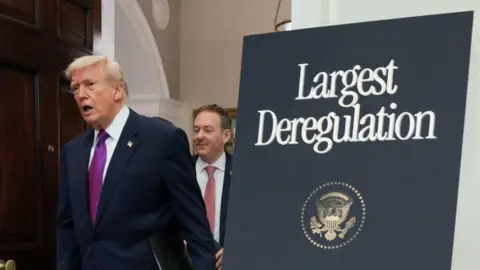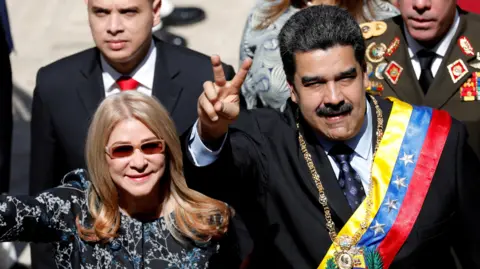
In a dramatic turn of events, US President Donald Trump announced the capture of Venezuelan President Nicolás Maduro following a large scale military operation. The operation involved the US army's elite Delta Force and was reportedly carried out in conjunction with US law enforcement due to charges against Maduro for drug and weapons offenses in New York.
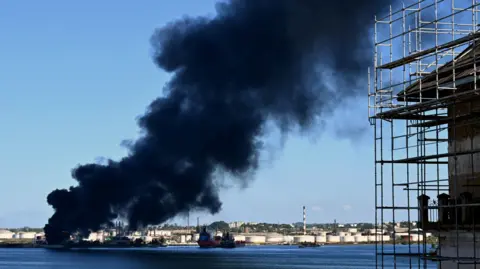
The events unfolded early Saturday as explosions were reported across Caracas, including at military bases. The Venezuelan government has since demanded proof of Maduro's well-being and declared a national emergency.
Details reveal that Maduro was captured from a fortified residence and is being transported to New York City. Trump, who described the operation as a 'brilliant success', plans to provide more details in a forthcoming news conference.
The stakes are high, with Venezuelan officials claiming that the US operation caused civilian casualties and denouncing the strikes as a military aggression. Maduro, a long-time political figure, has been under scrutiny for accusations related to drug trafficking and has faced significant opposition throughout his presidency.
As the situation develops, global responses range from condemnation of US actions to calls for evidence regarding Maduro's status. This historic event raises fundamental questions about sovereignty, international law, and the future governance of Venezuela.
The events unfolded early Saturday as explosions were reported across Caracas, including at military bases. The Venezuelan government has since demanded proof of Maduro's well-being and declared a national emergency.
Details reveal that Maduro was captured from a fortified residence and is being transported to New York City. Trump, who described the operation as a 'brilliant success', plans to provide more details in a forthcoming news conference.
The stakes are high, with Venezuelan officials claiming that the US operation caused civilian casualties and denouncing the strikes as a military aggression. Maduro, a long-time political figure, has been under scrutiny for accusations related to drug trafficking and has faced significant opposition throughout his presidency.
As the situation develops, global responses range from condemnation of US actions to calls for evidence regarding Maduro's status. This historic event raises fundamental questions about sovereignty, international law, and the future governance of Venezuela.