Australia's Prime Minister Anthony Albanese has announced a review into the police and national intelligence agencies after last weekend's Bondi Beach attack.
The ISIS-inspired atrocity last Sunday reinforces the rapidly changing security environment in our nation, Albanese said. Our security agencies must be in the best position to respond.
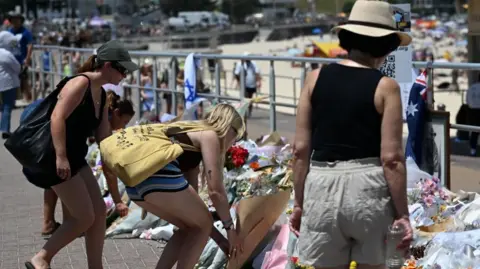
A national day of reflection was being held on Sunday to mourn the 15 people killed after two gunmen opened fire at a Jewish festival at the Sydney beach.
Amid tight security, a minute of silence will be observed at 18:47pm local time (07:47 GMT), marking exactly a week since the shooting began.
Police allege the attack on December 14, which they have declared a terrorist incident, was committed by a father-son duo, inspired by Islamic State ideology. Naveed Akram, 24, has been charged with 59 offences, including 15 counts of murder and one of committing a terrorist act. His father Sajid was killed during the attack.
Albanese said the intelligence review, due by April 2026, would focus on ensuring authorities were equipped to tackle extremism.
He said: The Department of Prime Minister and Cabinet will examine whether federal law enforcement and intelligence agencies have the right powers, structures, processes and sharing arrangements in place to keep Australians safe in the wake of the horrific antisemitic Bondi Beach terrorist attack.
In the wake of Australia's deadliest mass shooting in almost three decades, the government has announced plans to tighten gun controls, while New South Wales is pushing to crack down on hate speech.
As part of a national day of reflection, Bondi was to host a memorial later on Sunday, exactly one week after the tragedy. Earlier in the day, Governor-General Samantha Mostyn addressed a vigil held in Bondi, hosted by the National Council of Jewish Women Australia, where attendees largely wore white to symbolize peace.
Australians across the country are still reeling from the event, with a lingering sense of shock and disbelief.
Community activities resumed, highlighting resilience as locals return to a normal routine.